
Description
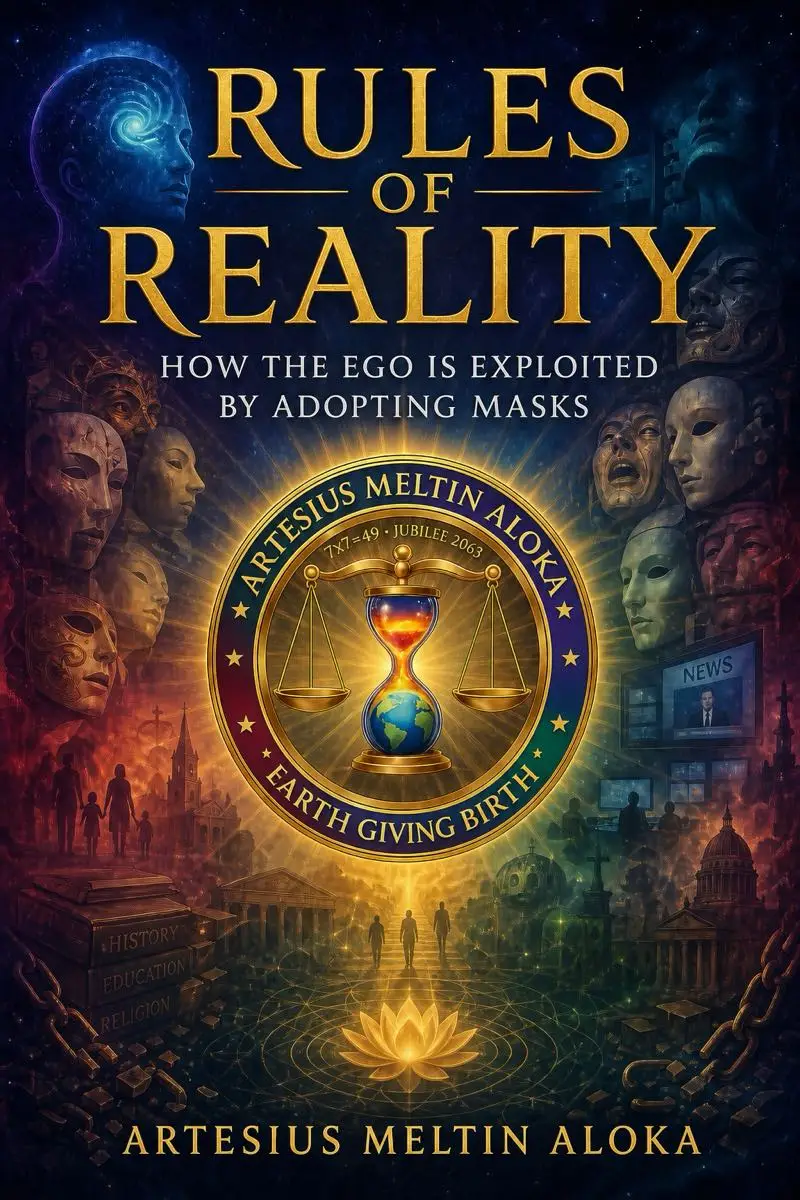
Everyone has a name, a history, and a voice in the head that narrates the day. It feels like the self. Rules of Reality argues that it may not be. The sense of being one continuous person is manufactured: a network of brain regions assembles it out of memory, belief, and social pressure, and revises it without asking permission. That much is neuroscience. What follows from it is harder to sit with: whoever shapes the inputs shapes the self.
The book's First Rule of Reality puts it in three clauses: "You are not your ego. Your ego is a tool. Someone else may be holding it."
Part One traces the machinery: how families, schools, media, and markets build identities at scale; how propaganda, advertising, and social media capture attention and induce a trance of normalcy that keeps a manufactured self from ever noticing itself; and who profits from the arrangement. Part Two turns to the unmasked: what authenticity looks like in the brain and in a life, why most people keep the mask on, and how much energy its upkeep consumes.
Part Three asks the practical question. How does anyone recognize a mask worn since childhood, interrupt a trance they cannot feel, and build something in its place out of values they actually chose? It answers in four stages: Recognition, Disruption, Reconstruction, and Integration.
Part Four widens the lens to civilizations, which wear collective masks of their own. Using Martin Armstrong's Economic Confidence Model and its 51.6-year wave, it reads the years leading to 2037 as a convergence rather than a prediction, a point where economic cycle, ecological reality, and civilizational identity meet.
Across thirteen chapters, with a glossary of more than 150 terms and over 260 references, Artesius Meltin Aloka draws on fifty years of attention training and on the work of Buckner, Zuboff, Frankl, Rogers, Jung, and others. His conclusion is plain: what is real does not need belief in order to exist, and what is false cannot survive clarity.
Aloka is a poet, healer, and independent researcher in human perception. He has lived on Hawaiʻi Island since 2005 and writes from an off-grid treehouse on Kīlauea's eastern rift.


Reviews
There are no reviews yet.