Description
Millions of people are becoming sicker while trying to get healthier: filling their smoothies with spinach and almonds, taking their supplements, and remaining caught in a cycle of pain, fatigue, and inflammation that no diagnosis fully explains and no treatment reliably resolves.
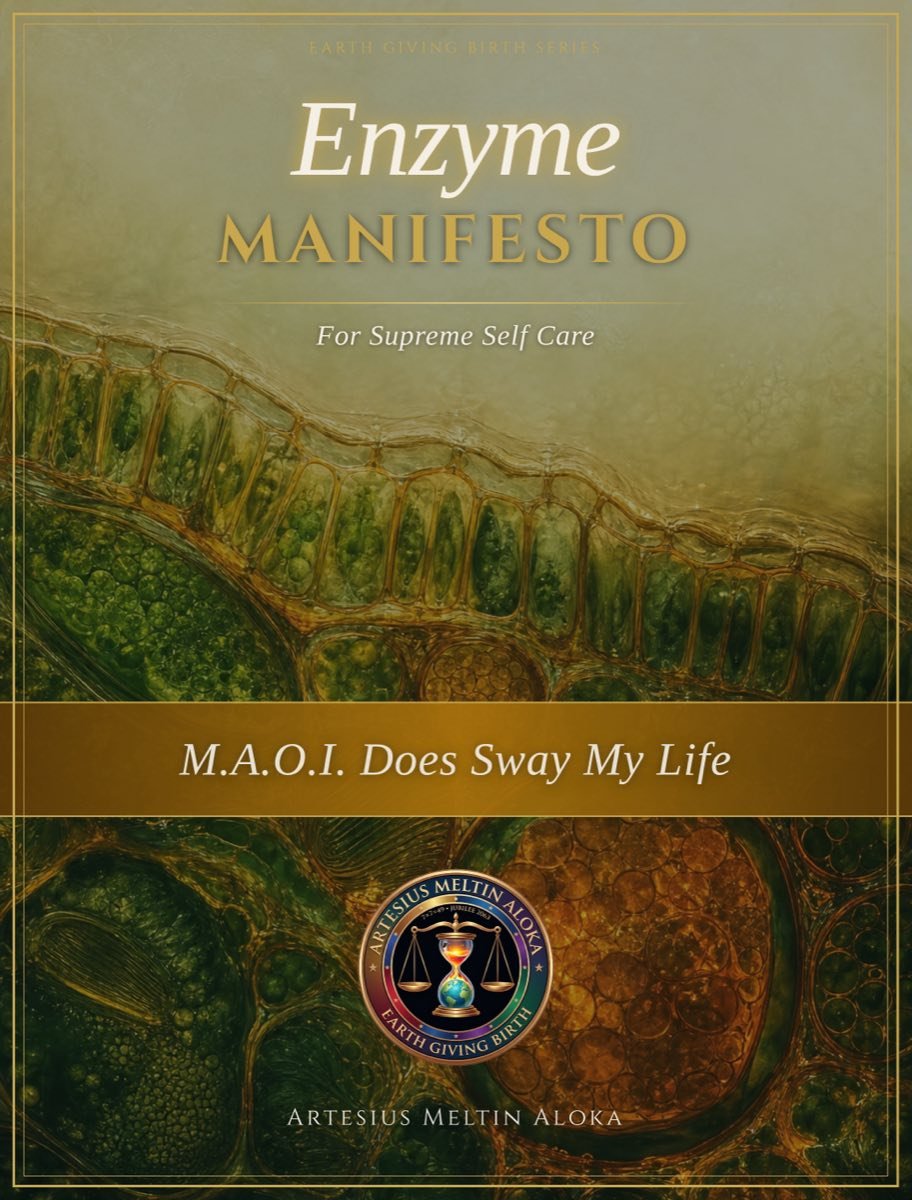
Enzyme Manifesto for Supreme Self Care treats inflammation as a signal to understand rather than a problem to suppress, and asks why the body has been unable to resolve it. Artesius Meltin Aloka, who writes as Art Aloka, argues that a wide range of chronic conditions trace back to the silent accumulation of calcium oxalate crystals in the tissues and the collapse of the enzymatic systems meant to clear them.
Its method is what the book calls the "Both Can Be True" framework, which honors the insights of mainstream medicine while making room for researchers who have challenged its blind spots. In the book's account, conventional nephrology is right that the kidney is a primary site of oxalate trouble, and the work of Sally K. Norton is right that the crystals also settle in joints, connective tissue, the thyroid, and the reproductive organs.
Five healing pillars organize the work: understanding inflammation, restoring the microbiome and its enzymes, pelvic polarity and structural balance drawn from Dr. Randolph Stone's Polarity Therapy, mental hygiene and nervous system regulation informed by Dr. Stephen Porges's polyvagal theory, and targeted nutrient support.
Across twenty-seven chapters the book moves from the science of crystals and enzymes to the pelvic conditions at its center, among them interstitial cystitis, prostatitis, vulvodynia, and kidney stones, then outward to digestive, autoimmune, metabolic, pediatric, age-related, and cardiovascular concerns. It sets out a low-oxalate diet, a supplement protocol, and condition-specific quick-start protocols. The closing chapter, The Enzyme They Said We Didn't Have, examines glyphosate and the gut bacteria that carry the enzyme it blocks, and states plainly which popular claims it declines to make.
The book is written as education, not medical advice, and asks readers to work alongside a qualified healthcare provider. Aloka is a healer, poet, and independent researcher who has spent five decades studying the body as a living ecosystem. He lives off-grid beside the Kīlauea rift zone on Hawaiʻi Island.


Reviews
There are no reviews yet.